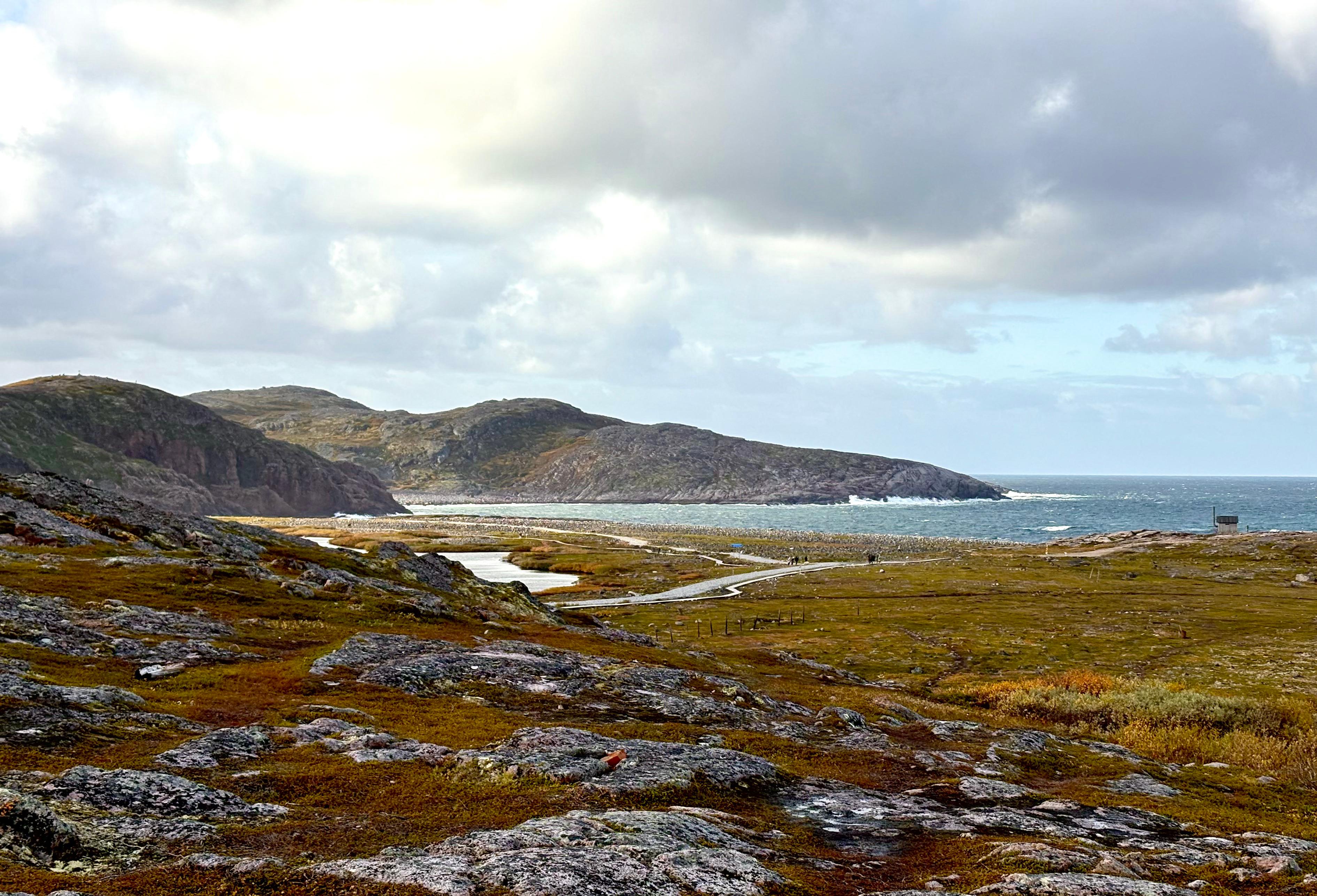
Teriberka is not just a point on the map of the Kola Peninsula. It is a place where the history of the North can be read in every stone, in every wave of the Barents Sea. From the first Pomor camps to the filming of 'Leviathan,' the village has gone through three eras, each leaving its mark.
Pomor beginnings: from seasonal camps to a colony
The history of Teriberka begins long before the official founding date. Already in the mid-16th century, Karelian fishermen from the White Sea region were developing the Murmansk coast. On the map of English navigator William Barrow, opposite the Kola Bay, there is a note: 'Kola River, flowing through Lapland from Karelia, and along it on small boats come Karelians to the seashore, who fish between Kegor and Cape Sovrbir.' Sovrbir is the English name for Cape Teriberka. By the end of the 16th century, the Teriberka area was already well developed by fishermen, and a camp appeared there.
For centuries, Teriberka Bay remained a place of seasonal fishing. Pomors from the White Sea region, hiring themselves out to fish owners in the so-called pokrut, caught cod here from spring to autumn, then returned home. The fishing technique remained unchanged until the 20th century: they fished with a longline — a long rope with many hooks, baited with sand lance and capelin. The main vessel was the shnyaka — reliable, sturdy, and cheap, costing 50 rubles. An artel of four fishermen sailed up to ten kilometers from shore, set the longline, rested, and checked it after a quarter or half a day. Stormy weather sometimes forced them to abandon the longline and hurry to shore — such fishing trips often ended in tragedy.
The permanent population of Teriberka at that time consisted of a few people who looked after the barns and vessels. The Sami herded reindeer on the ocean shore and went inland to the tundra for winter. The turning point came after the Crimean War. The British burned a number of Russian settlements on the western coast of Murman, including the camp of Malo-Nemetskoye. When the war ended, many victims decided to move east. To the five or six camps that existed in Teriberka before the war, another four or five camps from Malo-Nemetskoye immediately arrived — Zolotovsky, Legky, Postnikov, and Borovoy. Then colonists from the Pongama volost of Kemsky Uyezd came. Thus, in 1870, several peasant households formed the colony of Teriberka with the camp of the same name. This is the Teriberka founding history.
Soviet era: prosperity, war, and decline
In Soviet times, Teriberka became the center of a fishing district. In 1927, the Teriberka volost was transformed into the Teriberka District of the Murmansk Okrug of Leningrad Oblast. In 1935, the People's Commissar of the Food Industry, Anastas Mikoyan, visited the village — he familiarized himself with collective farm affairs. The meeting with collective farmers is captured in a photo from the magazine 'Karelo-Murmansk Krai.' In 1938, the camp of Teriberka was classified as a workers' settlement.
The Great Patriotic War was a severe trial. Almost the entire male population of the Teriberka District went to the front. According to the 'Book of Memory' of Murmansk Oblast, of those conscripted by the Teriberka District Military Commissariat, 200 people are considered dead, including 82 residents of Teriberka. The first German submarine in Teriberka Bay appeared on July 24, 1941. On the evening of August 6, it attacked the Northern Fleet dispatch vessel PS-70, which was traveling from Iokanga. The torpedo hit the stern, and the vessel sank rapidly. There were no ships in Teriberka that could help the sailors. A total of 45 people died.
After the war, Teriberka continued to live by fishing. In the 1960s, collective farm seiners stood at the Teriberka piers, and a House of Culture operated. But by the end of the 20th century, the village fell into decline. In 1997, Teriberka was removed from the subordination of Severomorsk and became an independent rural settlement. Devastation — both on the streets and in minds — became the village's hallmark.
Modern times: 'Leviathan' and the tourist boom
A new chapter in Teriberka's history began in 2014, when Andrey Zvyagintsev's film 'Leviathan' was shot here. The film won a Golden Globe and was nominated for an Oscar, and the world learned about Teriberka. 'Whether as naked truth or invented truth, as each understood, the film evoked mixed assessments — from high cinematic awards to sharply negative judgments,' writes Sorokozherdyev. But the fact remains: after 'Leviathan,' tourists started coming to the village. Now Chinese come here to conceive a child under the flashes of the northern lights, and Russians come for the leviathan, the sea monster, trying to see it on the shore or in the Barents Sea.
Teriberka attracts not only with its cinematic past. Here you can see a ship graveyard — rusting hulls of vessels that have become symbols of a bygone era. The ship graveyard Teriberka history is a reminder of the decline of the fishing industry. The Teriberka lighthouse, archaeological sites of ancient people, the harsh beauty of the Barents Sea — all this makes the village a unique place on the map of Russia.
Today, the history of Teriberka continues. The village is part of the Kola District of Murmansk Oblast, an asphalt road leads here, hotels and restaurants with local cuisine operate. But the main thing is that you can feel the breath of the North, the same one that inspired Pomors, writers, and filmmakers.
If you want to see how a northern settlement lives, where the past meets the present, plan a trip to Teriberka. Choose the route that suits you.
Key moments in Teriberka's history
From the first mention on maps to the present day, Teriberka has experienced many events. The Pomor period laid the foundation, the Soviet era brought development and trials, and the modern period opened the village to the world. Each stage is important for understanding the unique character of this northern settlement. The Teriberka village history is a story of resilience and transformation. The history of Teriberka Murmansk region is deeply connected to the sea.